Tile vs. Shingle Roofs in Southern California: How They Compare
Cost
Asphalt shingles are usually the more affordable option up front. Clay and concrete tile typically cost significantly more for materials and installation. Prices vary widely by home size, roof complexity and material quality, so obtain written estimates from several licensed contractors.
Lifespan
Architectural asphalt shingles commonly last around 20 to 30 years in mild climates, though intense sun can shorten that. Concrete and clay tiles can last 50 years or more when properly installed and maintained, although the underlayment beneath them often needs replacing sooner, sometimes after 20 to 30 years.
Weight and Structure
Tile is much heavier than shingles. Older homes may need a structural evaluation before tile is installed, and reroofing from shingles to tile may require reinforcement. Lighter-weight tile products are available for some situations.
Heat and Energy Performance
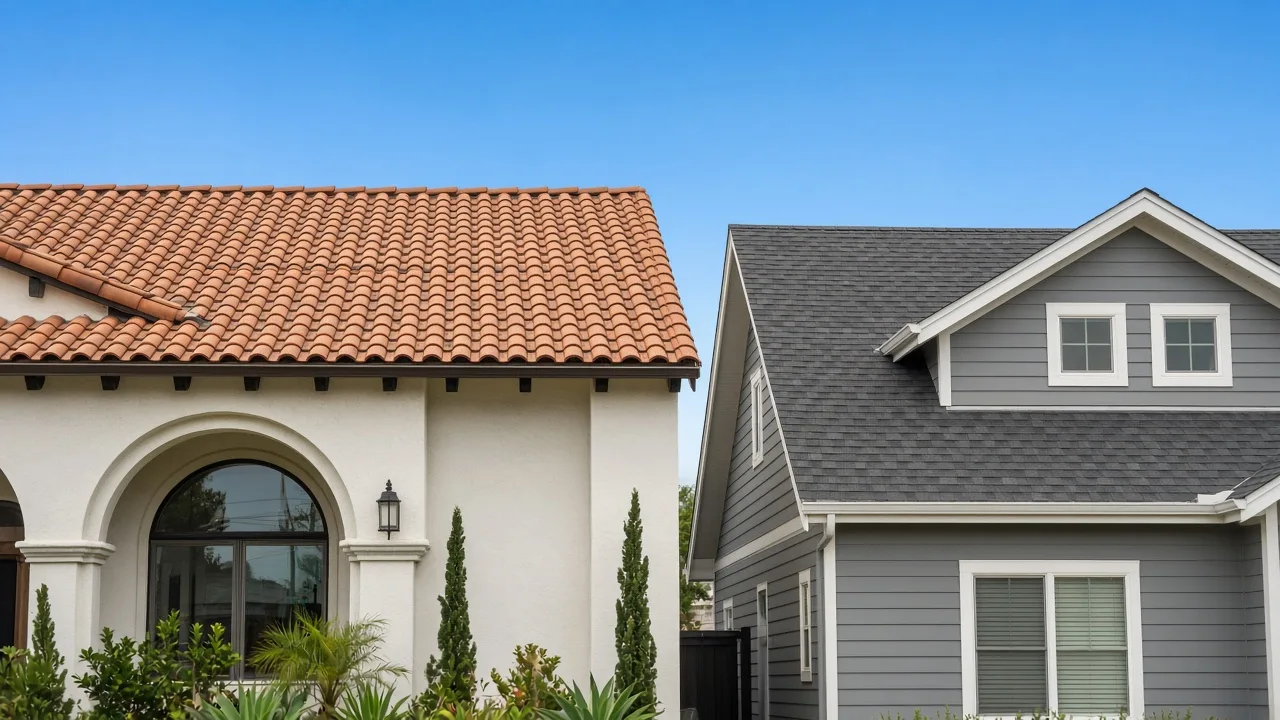
Tile can help moderate heat because air can circulate under the curved profile, and many tiles are available in reflective or "cool roof" colors. Cool-rated shingles are also available. California's energy code includes cool roof requirements in some cases, so ask your contractor which products qualify.
Fire and Wind Resistance
Both materials can achieve Class A fire ratings when installed as part of a rated assembly, which is important in wildfire-prone parts of San Diego County. Tile can be vulnerable to cracking if walked on, while shingles can lose granules or lift in strong winds.
Maintenance
- Tile: Check for cracked or slipped tiles, clean debris from valleys and have a professional handle repairs to avoid breakage.
- Shingles: Look for curling, missing granules and damaged flashing, and keep gutters clear.
Appearance and Home Style
Tile suits Spanish, Mediterranean and Mission-style homes, while shingles are available in many colors and profiles that suit most other styles. Check any HOA or historic district guidelines before choosing.
Which Should You Choose?
If you want longevity and a classic look and your home can support the weight, tile can be an excellent investment. If you need a lower upfront cost or a simpler installation, shingles are a practical choice. In either case, hire a licensed, insured roofer, request a written scope and warranty, and verify the license with the Contractors State License Board.
Whichever you pick, quality of installation matters as much as the material. Proper underlayment, flashing and ventilation are what keep a roof performing, so ask contractors how they handle those details and request references from recent local jobs.
p>